11 Clear Signs You Need a New Roof (New Jersey Homeowner Guide)
About 80% of residential roofs in New Jersey use asphalt shingles. Most asphalt shingle roofs last between 15 and 30 years, depending on the type, ventilation quality, and how many nor'easters they absorb. If your home sits in Union County, Essex County, or Morris County, freeze-thaw cycles and heavy storms can push that number toward the lower end. Here are eleven warning signs that your roof is approaching the end of its useful life, plus clear guidance on when a roof repair makes sense and when a full roof replacement is the better investment.
Key Takeaways
- Most asphalt shingle roofs in New Jersey last about 20 to 25 years. Curling or missing shingles, a sagging roofline, or daylight coming through attic roof boards are common signs you need a new roof, not just a patch.
- Visible outdoor clues include cracked shingles, dark streaks from algae growth, shingle granules accumulating in gutters, and damaged flashing around chimneys and vents.
- Indoor clues matter too: water stains on ceilings, musty smells in the attic, damp insulation, and unexplained spikes in energy bills all point to a failing roof.
- Northern New Jersey's harsh winters and storm seasons accelerate roof damage. A licensed, local roofing professional like Golden Home Exteriors can inspect and advise on repair vs. full replacement.
- Golden Home Exteriors offers free roof inspections and written quotes for homes across Union, Essex, and Morris County. Schedule yours before the next storm season.
How to Quickly Tell If You Might Need a New Roof (5-Minute Self-Check)
You do not need to climb onto your roof to spot trouble. This quick check uses what you can see from the ground and from your attic. If two or more answers are "yes," contact Golden Home Exteriors for a professional roof inspection.
Outdoor checks (from the street or yard):
- Do you see missing shingles or bare patches on any slope?
- Are shingle edges lifting, curling, or clawing downward along eaves or ridges?
- Can you spot cracked shingles, dark streaks, or green moss patches?
- Does the ridge line dip, sag, or appear wavy anywhere?
Indoor checks (attic, daytime, lights off):
- Is daylight visible through the roof boards (not through vents or gable openings)?
- Do you notice damp insulation, water stains on rafters, or musty odors?
Take cell phone photos of anything suspicious. These photos help a Golden Home Exteriors roofing specialist evaluate the situation during a free quote visit.
1. Your Roof Is 20+ Years Old (Or You Don't Know Its Age)
Standard 3-tab asphalt shingles last roughly 15 to 20 years in Northern New Jersey. Architectural (dimensional) shingles, which are thicker and laminated, typically hold up for 25 to 30 years inland. Roofs older than 20 years may need replacement, even when they look acceptable from the yard. Brittle shingles and hidden roof deck rot can develop out of sight after years of NJ winters.
To check your roof's age, review closing documents, your home inspection report, or permits filed with your local building department in towns like Florham Park or Morristown. Many homeowners in Livingston and Short Hills own homes built in the 1950s through 1970s where the original roof has been replaced only once, if at all.
Once a roof passes 20 to 25 years and shows even minor issues (granules in gutters, small leaks, curling along eaves), planning for a new roof is a practical next step. Golden Home Exteriors evaluates older roofs and presents options: targeted repairs where the roof still has useful life, or a timeline for full replacement within the next one to three years using their specialized roofing services in New Jersey.
2. Missing, Cracked, or Curling Shingles
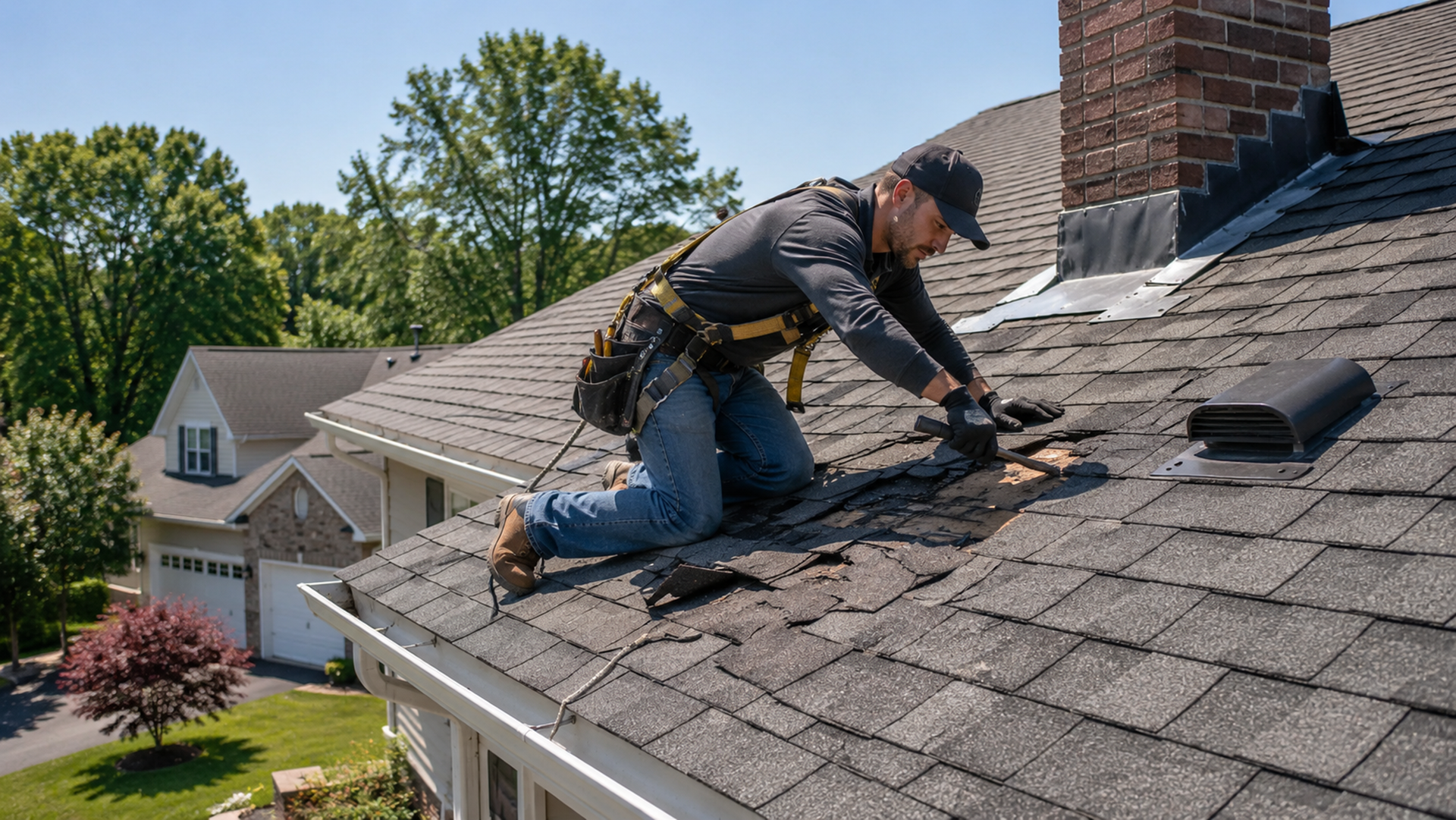
Missing shingles show up as bald patches or exposed underlayment, usually after strong wind events. In Union and Essex County neighborhoods, nor'easters regularly lift tabs or tear entire shingles from ridges and lower eaves.
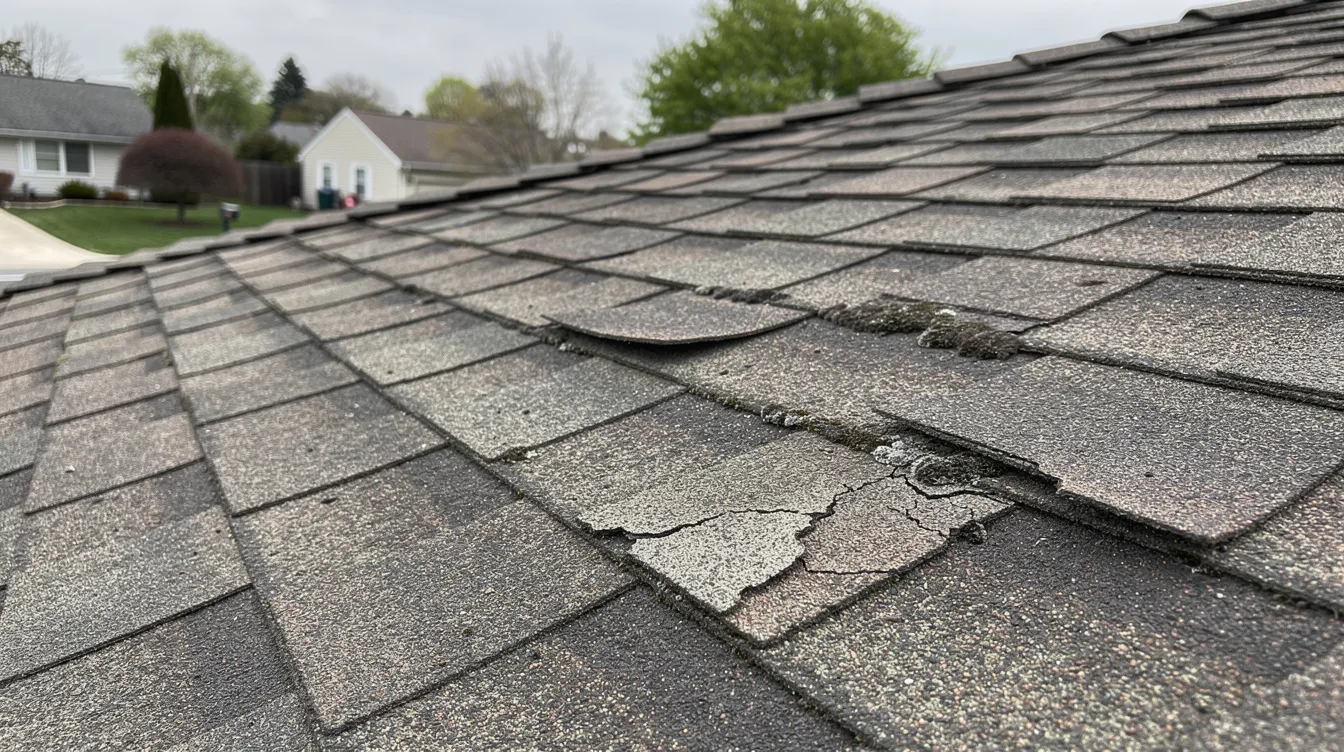
Cracked shingles develop visible fissures across their tabs from years of thermal expansion and contraction. Curling shingles, where edges lift upward or claw downward, lose wind resistance and blow off more easily. Curling, buckling, or missing shingles indicate deterioration across the roof system. Curling or missing shingles indicate roof replacement is needed when the damage spans multiple slopes.
A few damaged shingles from a single storm can often be replaced as a partial repair. But widespread cracked shingles or curling shingles across two or more slopes usually means you need a new roof. Do not walk on brittle, aging roof shingles yourself without proper safety equipment. Golden Home Exteriors can safely assess storm and wear damage, address top roofing problems in New Jersey, and recommend repair or full replacement.
3. Granules in Gutters and Downspouts
Shingle granules are the dark, sand-like mineral particles embedded in the surface of asphalt shingle roofs. Granules protect shingles from UV damage and slow the aging process. New shingles shed a small amount of granules during the first year after installation; that is normal.
The problem appears later. Asphalt shingles typically last 20 to 25 years before heavy granule loss occurs. When you find large accumulations of granules in gutters, on driveways under downspouts, or inside splash blocks, that loss signals advanced shingle wear. Granule loss in gutters indicates aging shingles. Granules in gutters indicate shingle deterioration and potential leaks. Granules collecting in gutters may signal a need for roof replacement. Heavy granule buildup in gutters suggests roof deterioration. Excessive granule loss can lead to water penetration during New Jersey's heavy spring and fall storms.
Check your gutters in late summer or after large storms. If you see consistent piles of granules, schedule a roof inspection. Golden Home Exteriors inspects gutters and roof surfaces during a free estimate and explains whether the granule loss is normal aging or a sign you need a new roof soon.
4. Dark Streaks, Moss, and Algae Growth
Dark streaks on roof shingles are usually caused by a cyanobacterium called Gloeocapsa magma. Algae growth is common on north-facing slopes in shaded New Jersey yards, particularly in towns like Short Hills and Whippany where mature trees block direct sunlight for much of the day.
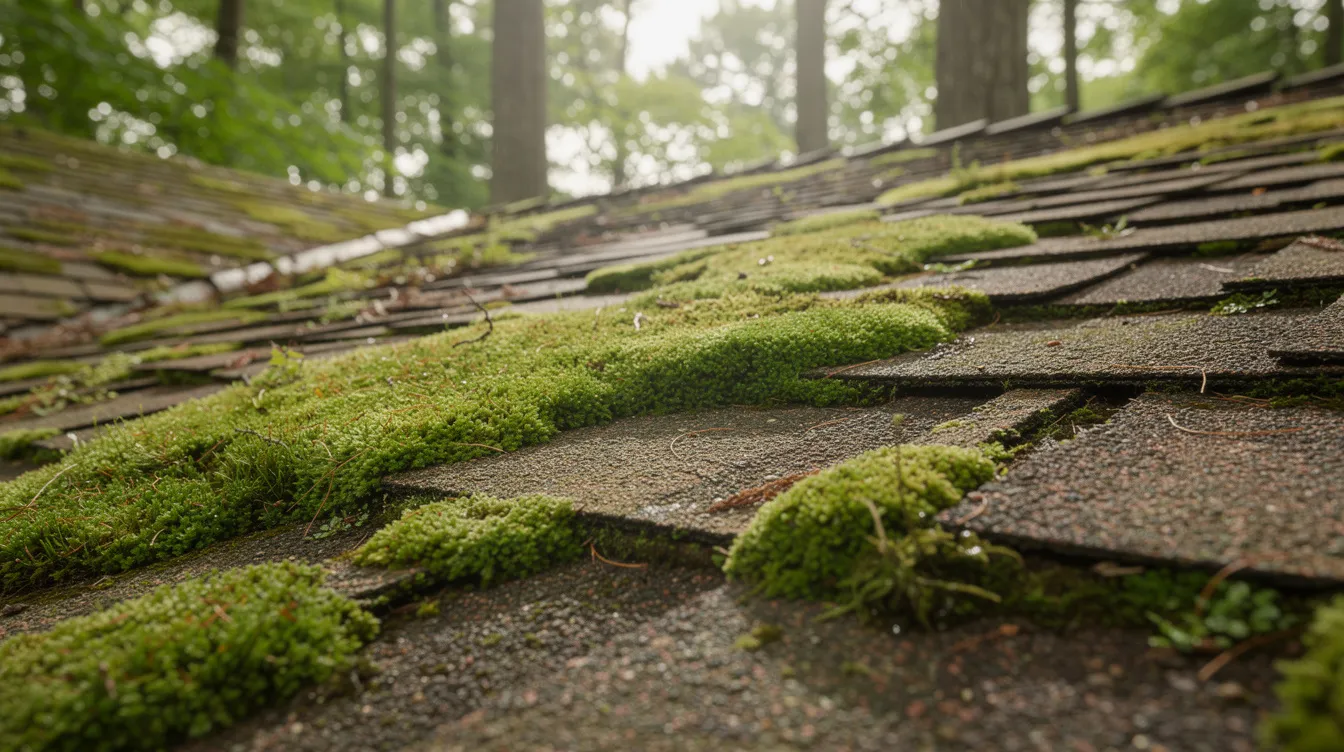
Light algae staining is mostly cosmetic. But thick moss or algae can trap moisture against shingles, lifting edges and accelerating rot underneath. Moss growth in mats or lichen colonies that spread year after year across entire slopes is a different problem. Aggressive DIY cleaning with pressure washers strips granules and worsens damage.
Algae growth alone may not mean you immediately need a new roof. But moss combined with an old roof, active leaks, or soft spots often pushes the decision toward full replacement. Golden Home Exteriors can evaluate whether dark streaks are cosmetic or one of several other signs indicating it is time for a new roof.
5. Damaged Flashing Around Chimneys, Vents, and Skylights
Flashing is the thin metal material (often galvanized steel or copper) that seals joints where the roof meets chimneys, skylights, vent pipes, and walls. In older brick homes across Essex and Morris County, flashing failures are among the most common sources of roof leaks.
Signs of damaged flashing include:
- Rust, cracks, or gaps in the metal
- Missing sections or lifted counter-flashing along brick chimneys
- Caulk or sealant that has dried, cracked, or separated
Rust or damaged flashing creates entry points for water to slip under shingles and into the roof deck, leading to rot, mold, and interior ceiling stains. On a younger roof, re-sealing or replacing flashing solves most leaks. On an older roof with multiple areas of concern, flashing problems often trigger a full replacement. Golden Home Exteriors photographs all flashing during inspections and explains whether a targeted flashing repair or a new roof with new flashing is the safer investment.
6. Sagging or Uneven Rooflines
Stand across the street from your house and look at the ridge line and main planes. Dips or waves in the roofline indicate structural issues. A sagging roofline indicates structural damage, often from long-term moisture damage, undersized or deteriorated rafters, or rotted roof decking.
A sagging roof usually indicates a structural problem requiring replacement, not a shingle-level fix. Sagging or soft roof decking indicates moisture issues beneath the surface. Sagging roofs indicate weakened structural supports, and a sagging roof can lead to catastrophic failure if left unaddressed. Sagging rooflines require immediate inspection and potential replacement.
Many homeowners in Union, Essex, and Morris County carry heavy snow loads each winter. That weight compounds the stress on a weakened support structure. Do not delay if you see sagging; Golden Home Exteriors coordinates structural assessments when needed and replaces the roof deck and shingles as part of a full replacement.
7. Daylight Coming Through Roof Boards or Attic Leaks
Visit your attic on a bright day. Turn off all lights. Look for pinpoints or streaks of daylight coming through the roof boards, excluding vents and gable openings. Daylight showing through roof boards signals gaps in the roofing material. Daylight visible through roof boards often means a full replacement is needed. Visible light through roof beams suggests serious structural problems that demand immediate attention.
Other attic clues to watch for:
- Damp insulation or compressed insulation near the underside of the roof deck
- Water stains on rafters or sheathing
- Rusted nails pushing through decking ("nail pops")
- Mold or musty smells in the attic, which indicate water intrusion
Isolated small gaps in very old homes can sometimes be sealed, but widespread daylight visible through roof boards or multiple wet areas almost always means the roof starts to fail across its full surface. Call Golden Home Exteriors if you see daylight or active leaks during rain; a technician will determine whether repair is feasible or if you truly need a new roof.
8. Interior Water Stains, Peeling Paint, and High Energy Bills
Water stains on ceilings often mean roof leaks. Yellow-brown rings on ceilings or upper walls, bubbling paint near corners, and recurring drywall repairs in the same locations are indoor evidence of water damage. Slow roof leaks can travel along framing before surfacing as stains, meaning underlying damage may have been growing for months before it becomes visible.
Roof condition also affects energy bills. Gaps in the roof system and wet attic insulation let heated air escape in winter and humid air enter in summer. If your HVAC system runs consistently but bills climb without explanation, a compromised roof may be one cause. When a new roof is paired with proper ventilation and insulation, homeowners can see 5 to 15% reductions in HVAC energy costs. Golden Home Exteriors inspects the roof and attic together and can recommend a new roof system with improved windows, siding, and gutters as part of their broader exterior home services in New Jersey and ventilation to help lower energy bills.
9. When Can You Repair, and When Do You Need a Full Replacement?
Repair makes sense when:
- The roof is under about 15 years old
- Damage is localized (a few missing shingles, one flashing seam, a single small leak)
- The roofing material across most of the roof is still in solid condition
Localized damage may only require targeted repair. Typical NJ repair costs range from $150 to $1,500 for minor issues, and up to $3,000 or more for larger work.
Replacement makes sense when:
- The roof is over 20 years old with damage across multiple areas
- Cracked shingles, curling, or granule loss appears on more than one slope
- A sagging roofline or repeated leaks are present
Frequent repairs suggest a roof is nearing the end of its lifespan. Repeated leaks may indicate systemic roof failure. Frequent leaks and damp insulation signal a failing roof that is past the point of cost effective patching. If repairs exceed 30% of a new roof's cost, replace it. Full roof replacement for asphalt architectural shingles on a typical Northern NJ home (1,800 to 2,500 sq ft) runs $10,000 to $25,000 depending on roof size, pitch, and deck condition.
Golden Home Exteriors provides honest, written estimates comparing repair vs. new roof options. Avoid "band-aid" patch jobs from unlicensed contractors; those can create problems with future homeowners insurance claims and home resale inspections.
10. Homeowners Insurance, Storm Damage, and New Roof Decisions
Homeowners insurance typically covers sudden, accidental damage from wind, hail, or overhanging tree branches falling during storms. Normal wear and age are excluded. Insurance companies often consider roof age when assessing risk and setting premiums. Major storm damage may require full roof replacement if the damage crosses insurer thresholds (often 25% or more of the roof surface).
Concrete examples: shingles torn off during a March windstorm in Morristown, or a large limb crashing onto the roof during a summer thunderstorm in Union, could justify a claim for repair or full replacement.
Steps to protect your claim:
- Document roof damage with photos right after storms
- Avoid starting non-emergency repairs before contacting your insurer
- Request a detailed written inspection report from your contractor
Golden Home Exteriors provides inspection reports and photos that homeowners share with insurance companies to support claims. Even when homeowners insurance does not fully cover a new roof, replacing an aging roof helps keep your home protected, stabilize future premiums, and prevent larger uninsured losses. Save money long-term by catching problems early rather than waiting for serious damage.
11. Why New Jersey Homeowners Choose Golden Home Exteriors for a New Roof
Golden Home Exteriors is a licensed, insured, family-run roofing and home improvement company in Florham Park, NJ. The company serves communities across Union, Essex, and Morris County, including Livingston, Summit, Short Hills, Whippany, and Morristown.
Roofing services include a full range of comprehensive roofing and home improvement services in northern New Jersey:
- Full roof replacement and new roof installation on additions
- Roof repair and storm damage assessments
- Related exterior upgrades: siding, windows, and gutter installation through their broader roofing, siding, and windows services in Morris County
The company focuses on durable, energy-efficient roofing systems built for New Jersey's climate, helping prevent roof leaks and stabilize energy bills. Free, no-obligation roof inspections and written quotes are available, along with guidance on prioritizing repairs vs. full replacement based on budget and condition.
Golden Home Exteriors recently rebranded from Golden Home Improvements to reflect a broader focus on complete home exteriors, including roofing, siding, windows, and gutters and showcases stunning home improvement projects that highlight this expanded expertise. The name changed; the commitment to quality craftsmanship and competitive pricing for Northern NJ homeowners did not.
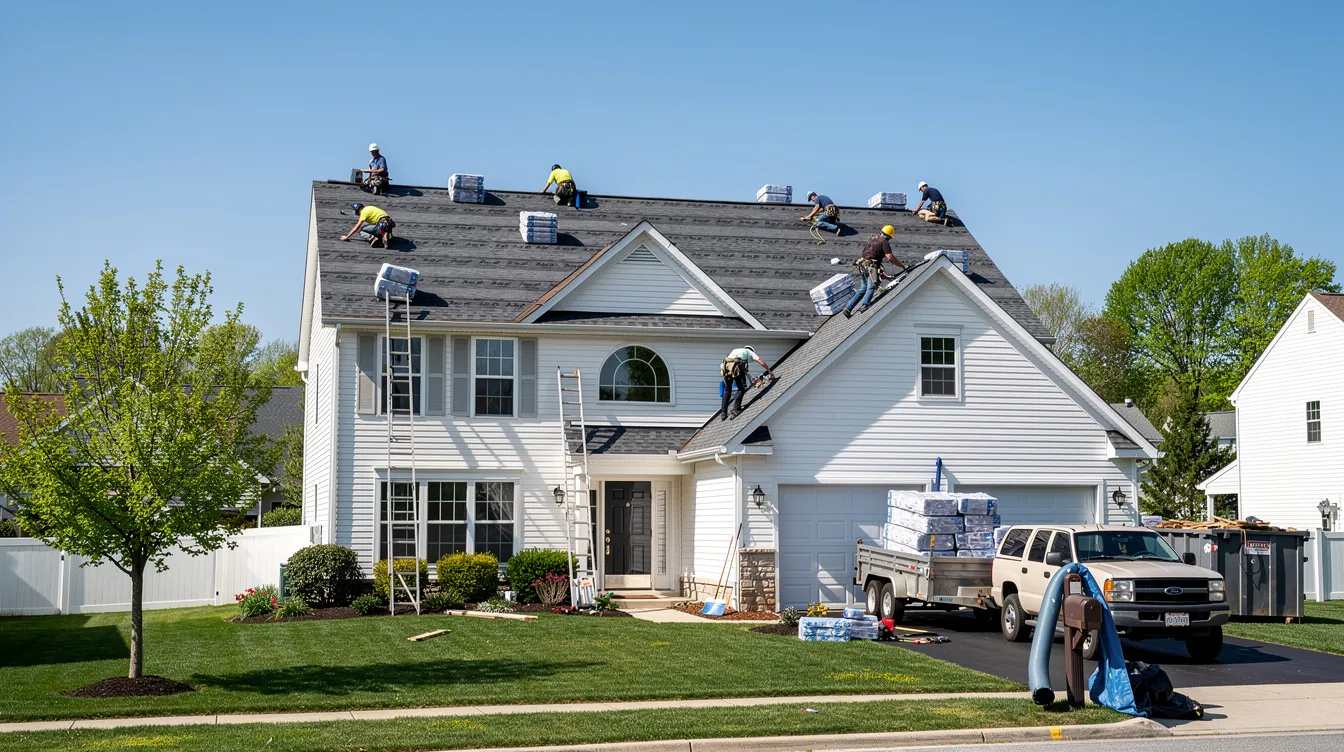
Ready for Peace of Mind? Schedule Your New Jersey Roof Inspection Today
If you spotted any of the seven signs above (or all eleven), your roof is telling you something. Missing shingles, dark streaks, damaged flashing, daylight in the attic, a sagging roofline, or rising energy bills each deserve attention. Together, they point to a roof that needs more than regular maintenance.
Golden Home Exteriors offers free roof inspections and quotes for homes throughout Union County, Essex County, and Morris County, with flexible scheduling during weekdays and select Saturdays, including dedicated roof replacement services for Madison, NJ homeowners. Act before the next big storm or winter season to avoid costly repairs, emergency leaks, and rushed decisions about a full replacement.
Call, submit an online form, or visit the Florham Park office page to request a quote for a new roof, roof repair, or a full exterior upgrade package covering roofing, siding, windows, and gutters. A professional assessment from Golden Home Exteriors will clarify whether you truly need a new roof or if strategic repairs can safely extend your roof's life and improve curb appeal.
Frequently Asked Questions About Knowing When You Need a New Roof in New Jersey
How often should I have my roof inspected in New Jersey?
Professional inspections are recommended to assess roof condition at least every two years for typical asphalt shingle roofs. Once a roof passes 15 years, switch to annual inspections due to New Jersey's freeze-thaw cycles and storm exposure. Schedule an extra inspection after any major wind or hail event in Union, Essex, or Morris County, particularly if nearby homes show visible damage or if you live in areas like Summit that can benefit from specialized roofing and exterior services in Summit, NJ. A roof inspector from Golden Home Exteriors can set up a recurring schedule to catch minor issues before they become expensive repairs.
Can I just replace the damaged section of my roof instead of the whole thing?
A partial repair is feasible on relatively young roofs with localized damage. The challenge is matching color and texture on older shingles; manufacturers change formulations, and UV exposure fades existing shingles over time. When damage is widespread or the roof is over 20 years old, patching sections often costs more over time than a full replacement and may not satisfy insurers or home resale inspections. Golden Home Exteriors evaluates whether a partial repair will perform well and look acceptable or if a full replacement is the smarter investment.
Will a new roof really help with my high energy bills?
The roof is one piece of the energy-efficiency puzzle, but a substantial one. A new roof system with proper ventilation and attic insulation reduces heat loss in winter and heat gain in summer. Combined, these upgrades can produce measurable savings on heating and cooling. Golden Home Exteriors pairs new roofing material with appropriate ridge and soffit venting and, when requested, coordinates insulation improvements. Many homeowners compare 12 months of utility bills before and after replacement to measure the impact.
How long does a typical roof replacement take in Union, Essex, or Morris County?
Most single-family asphalt shingle roof replacements take one to three days, depending on roof size, steepness, and weather. Additional time is needed if rotten decking is discovered during tear-off or if homeowners add related work like gutters or skylight replacement. Golden Home Exteriors provides a clear schedule before work begins and keeps homeowners updated on timing throughout the project.
Do I need to move out while my new roof is installed?
In nearly all cases, homeowners can stay in their home during roof replacement. Expect construction noise during work hours. Practical tips: move vehicles away from the house, secure fragile wall-mounted items from vibration, and keep pets and children indoors and away from work areas. Golden Home Exteriors prioritizes safety, site protection, and thorough daily cleanup so families can remain comfortable during the project.