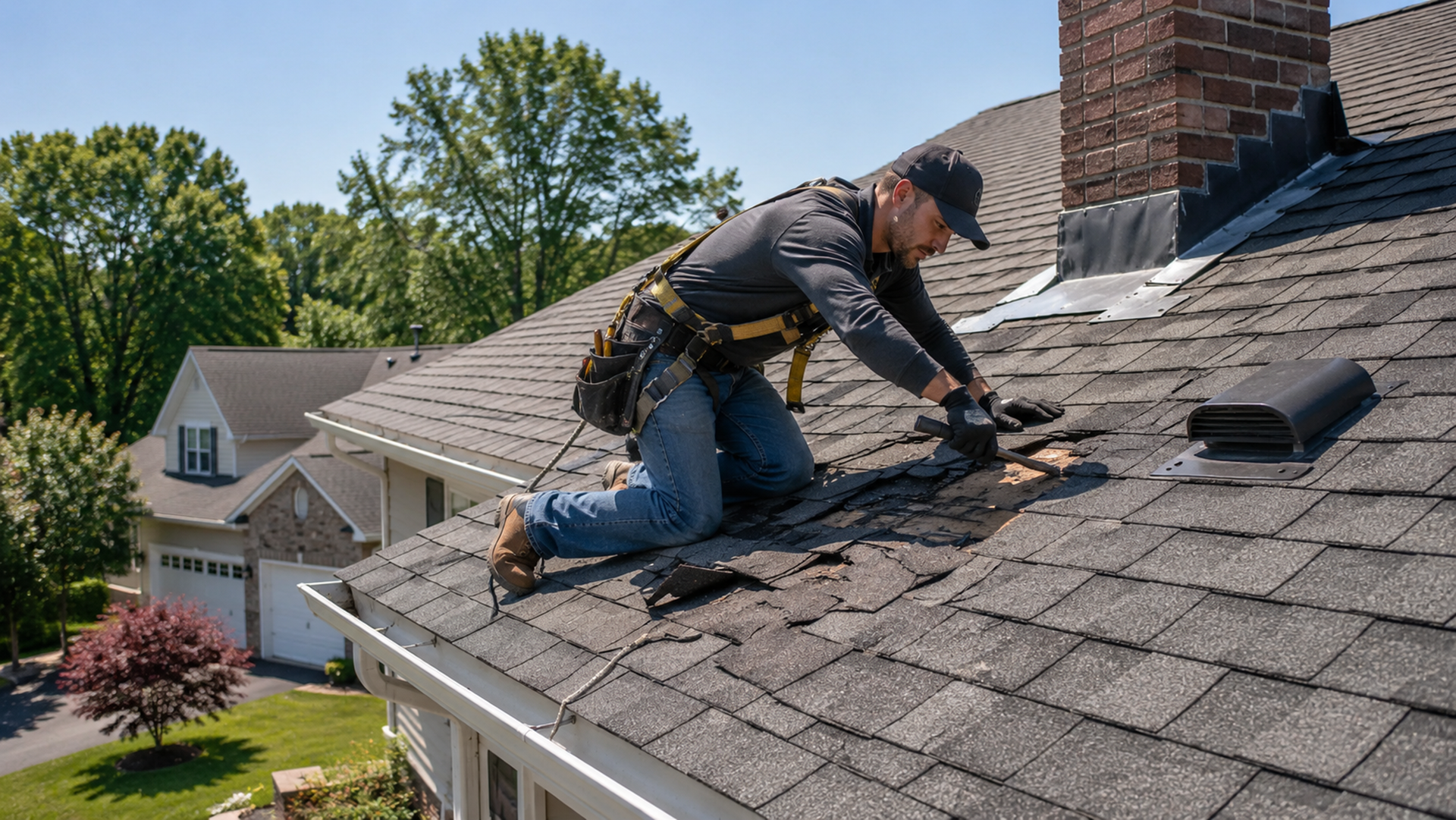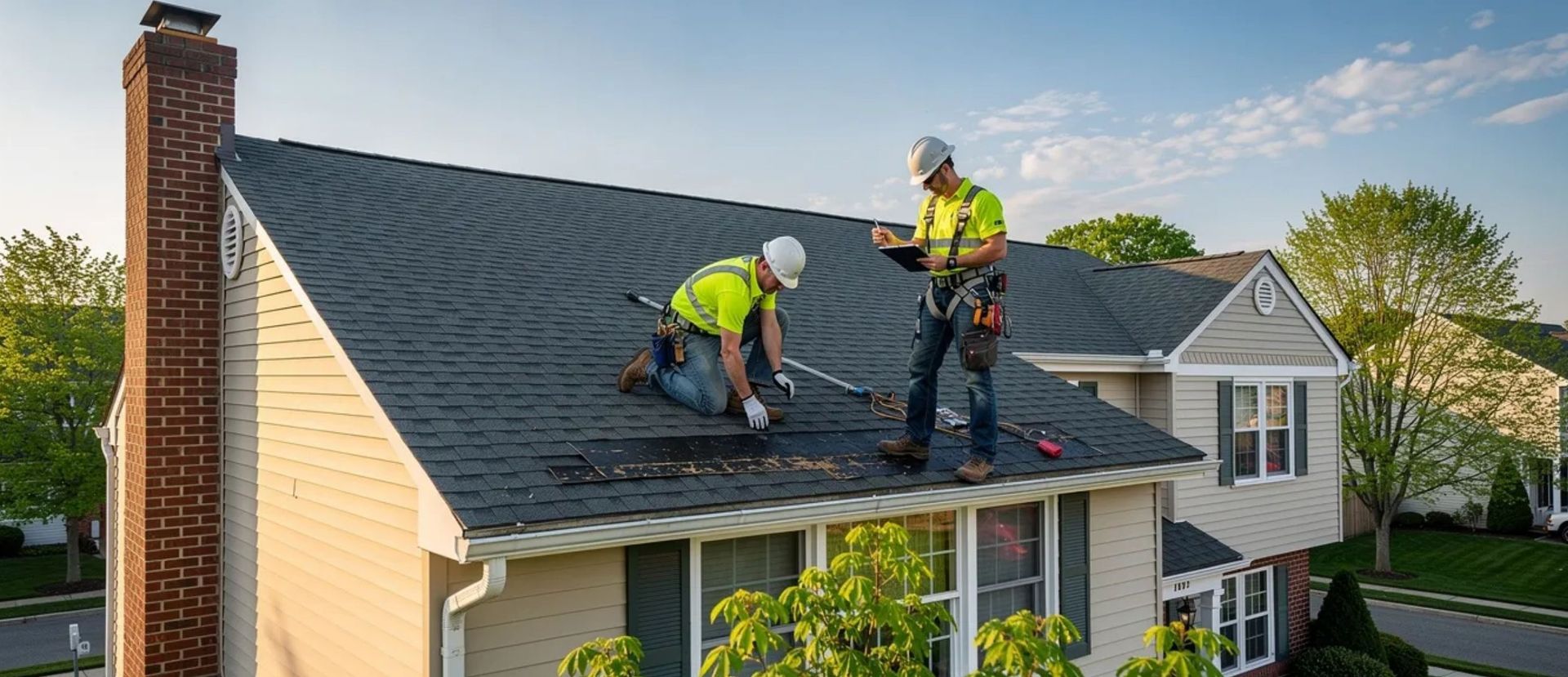
Installing Gutters on Detached Garage in NJ: Step-by-Step Guide
Adding rain gutters to your detached garage might seem like a minor upgrade, but in New Jersey's demanding climate, it's one of the smartest investments you can make. This guide is for New Jersey homeowners looking to protect their detached garages from water damage. Proper gutter installation prevents costly repairs and foundation issues. This guide walks you through everything from planning and materials to installation and drainage connections.
Key Takeaways
Here's what every NJ homeowner needs to know about this job:
- In New Jersey's heavy rain and snow, installing gutters on a detached garage in NJ is crucial to protect siding, doors, and foundation from water damage and freeze-thaw cycles
- Do garages need gutters in NJ? Yes—frequent Nor'easters, 50-100 annual freeze-thaw cycles, and clay soils that retain moisture make gutters strongly recommended
- Plan for proper pitch (about 1/4 inch drop per 10 feet), correct downspout placement away from doors, and corrosion-resistant aluminum with stainless-steel screws
- Golden Home Improvements can design, install, and maintain garage gutters throughout New Jersey, including tying into existing house systems or yard drains, and offer a full range of gutters and leaders solutions
Why Installing Rain Gutters on a Detached Garage in NJ Matters
New Jersey averages over 45 inches of rainfall annually, with summer thunderstorms dropping 2-4 inches per event and Nor'easters delivering up to 10 inches of rain or snow. This weather hits detached garages hard.
Installing gutters on a detached garage helps prevent water damage to the structure and protects the foundation by directing water away from it. Without gutters, water can pool around the garage, leading to potential foundation issues.
The question “do garages need gutters in NJ?” comes up often. While state building codes don't universally mandate them, local municipalities frequently expect proper roof drainage. Many inspectors prioritize stormwater management to prevent neighbor disputes and erosion problems.
Consider this: a standard 20x20-foot garage roof can shed 400-600 gallons during a single 1-inch rainstorm. Without gutters, that water pools against your slab edges, soaks your siding, and saturates the soil around your foundation.
- Detached garages in NJ often sit lower on lots or near driveways, increasing flood and icing risks
- Rainwater from the house gutters follows a completely different path than your garage roof runoff
- Clay soils common in central NJ retain moisture and worsen foundation erosion
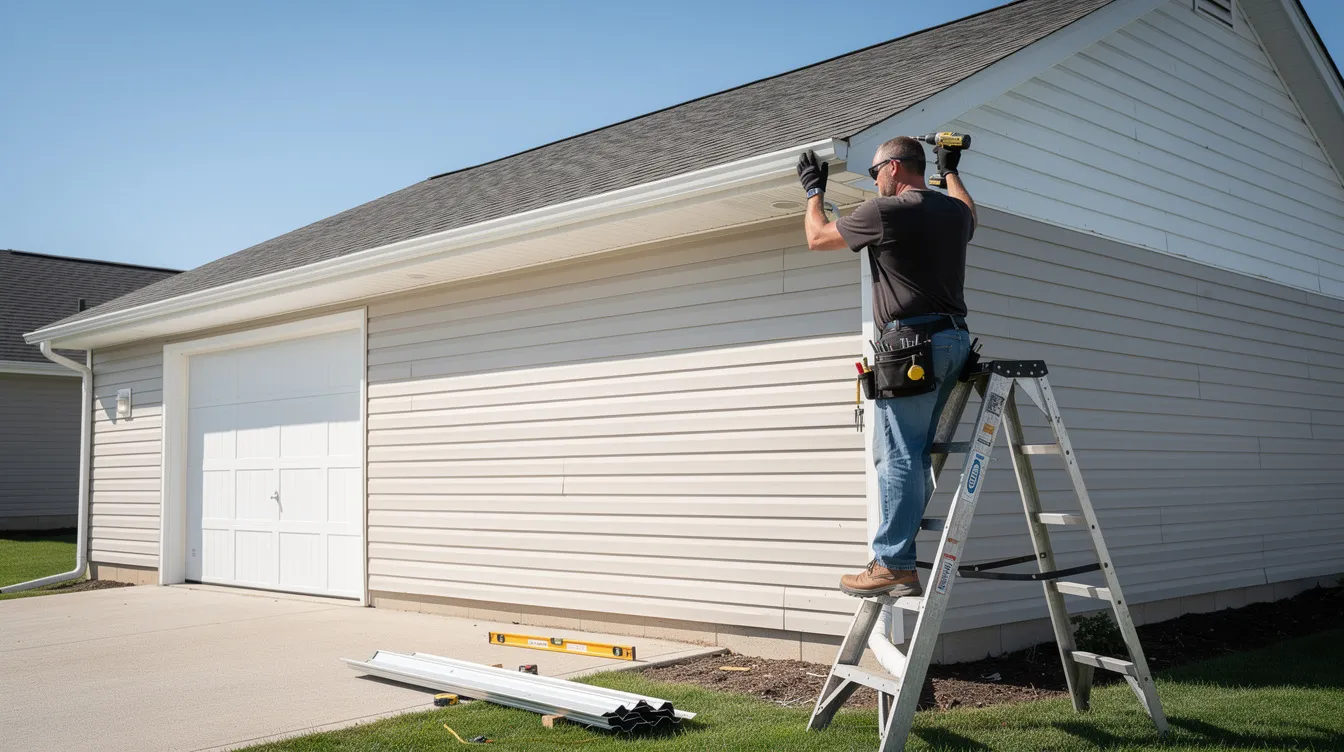
Benefits of Gutters on a Detached Garage
Rain gutters do more than redirect water away from your garage—they protect your entire investment, especially when paired with a roof that's designed to withstand New Jersey's most common roofing problems and climate stresses. Here's what properly installed gutters accomplish:
- Protect siding and doors: Gutters prevent wind-driven rain from soaking wood trim, garage doors, and vinyl siding, reducing peeling paint, rot, and staining by 70-90%, especially when paired with durable, professionally installed siding and trim systems
- Keep the interior drier: Less water splashing under doors and along slab edges means lower mold risk on stored vehicles, tools, and seasonal items
- Preserve landscaping: Water falling directly off the roof erodes 1-2 inches of topsoil yearly, beats up flower beds, and washes mulch onto your driveway
- Protect slab and foundation: Unmanaged runoff can undermine slab edges and cause freeze-thaw damage that leads to settling or cracking
- Reduce ice hazards: Without gutters, winter melt drips onto walkways, forming dangerous icy patches where you and your family walk
Planning Your Detached Garage Gutter Layout
Before you purchase materials or schedule a contractor, spend time planning. This upfront effort prevents costly mistakes.
Measuring the garage: Use a tape measure to record each eave run. Sketch the garage footprint and note the length of front, back, and any side roofs. A typical two-car garage has 80-100 linear feet of eave.
Deciding where downspouts go: Place them at natural low points, away from door openings and pedestrian paths. Keep downspouts at least 3-5 feet from garage doors.
Pitch and slope: Plan for 1/4 inch drop per 10 feet of gutter run. A 40-foot side needs about a 1-inch drop from the high end to the downspout outlet.
Handling long runs: Sides longer than 40 feet may need two downspouts—one near each corner—or a center high point that drains both directions.
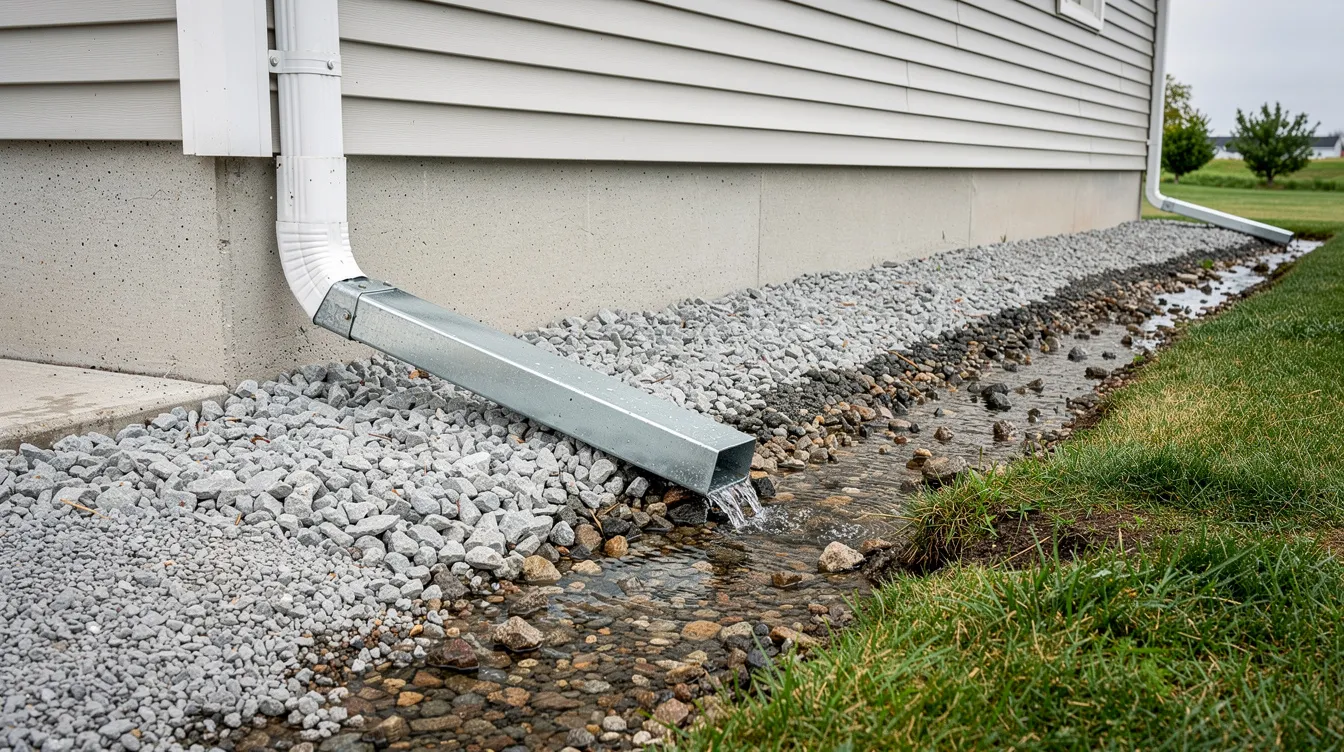
Drainage strategy: Plan where each downspout discharges. Options include splash blocks, extensions, or underground pipe to a French drain. Water should end up 4-6 feet minimum from the garage.
Checking local requirements: Some NJ towns and HOAs have rules about directing runoff toward neighboring properties. Verify requirements before you install.
Choosing the Right Gutter Materials and Sizes for NJ Garages
Selecting materials involves balancing durability, cost, and NJ's specific climate challenges—humidity, road salt, and coastal air near the shore, and many homeowners pair gutter projects with comprehensive exterior home services from a full-service roofing, siding, window, and gutter contractor in Randolph and Northern New Jersey.
- Aluminum: Lifespan 20-30 years. Best for most NJ garages. Costs about $2.75 per linear foot, resists corrosion, and handles freeze-thaw.
- Vinyl: Lifespan 10-15 years. A cost effective, commonly used choice for budget projects. Brittle in cold, not recommended for heavy snow.
- Steel/Galvanized: Lifespan 50+ years. Best for premium builds. Higher cost, excellent durability.
- Copper: Lifespan 50+ years. Best for historic/upscale. Aesthetic appeal, significant investment.
Corrosion resistance: Use aluminum or galvanized components with stainless-steel fasteners (316-grade) or coated screws to withstand NJ conditions.
Gutter size: 5-inch K-style gutters work for most detached garages. Upgrade to 6-inch for large garages, metal buildings, or steep pitches.
Downspout size: Standard downspouts are typically 4 inches in diameter; 2x3 downspouts handle small garages, while 3x4 works where pine needles, oak leaves, or heavy rain are common.
Leaf protection: Consider guards under large trees, but know they still require periodic cleaning.
Style and color: Match or complement your home's trim so the garage looks intentional and cohesive.
Step-by-Step: Gutter Installation on a Detached Garage
This overview covers the sequence of work. For some homeowners, this can be a manageable DIY project, but each step still requires attention to detail for a leak-free system that lasts.
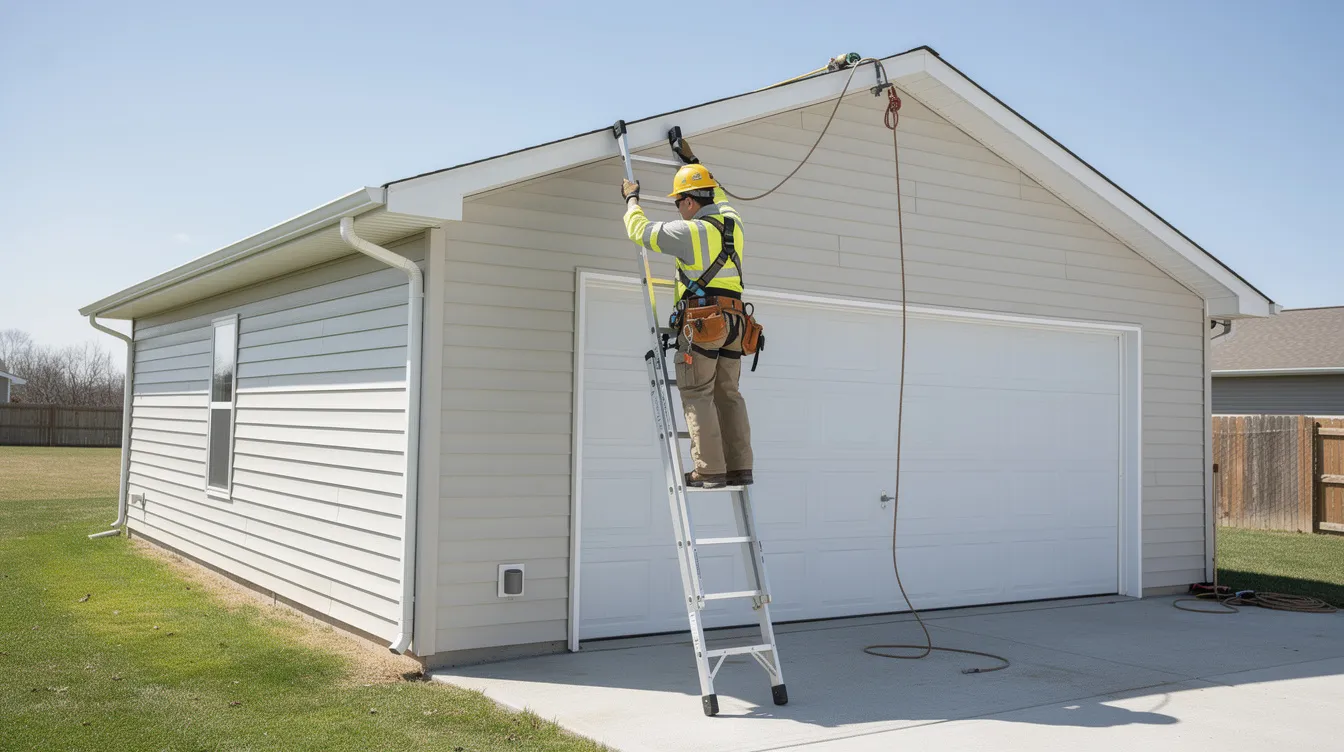
Safety first: Set your ladder on firm, level ground. Work with a helper for lifting gutter sections. Wear gloves and eye protection. Avoid working during wind or rain.
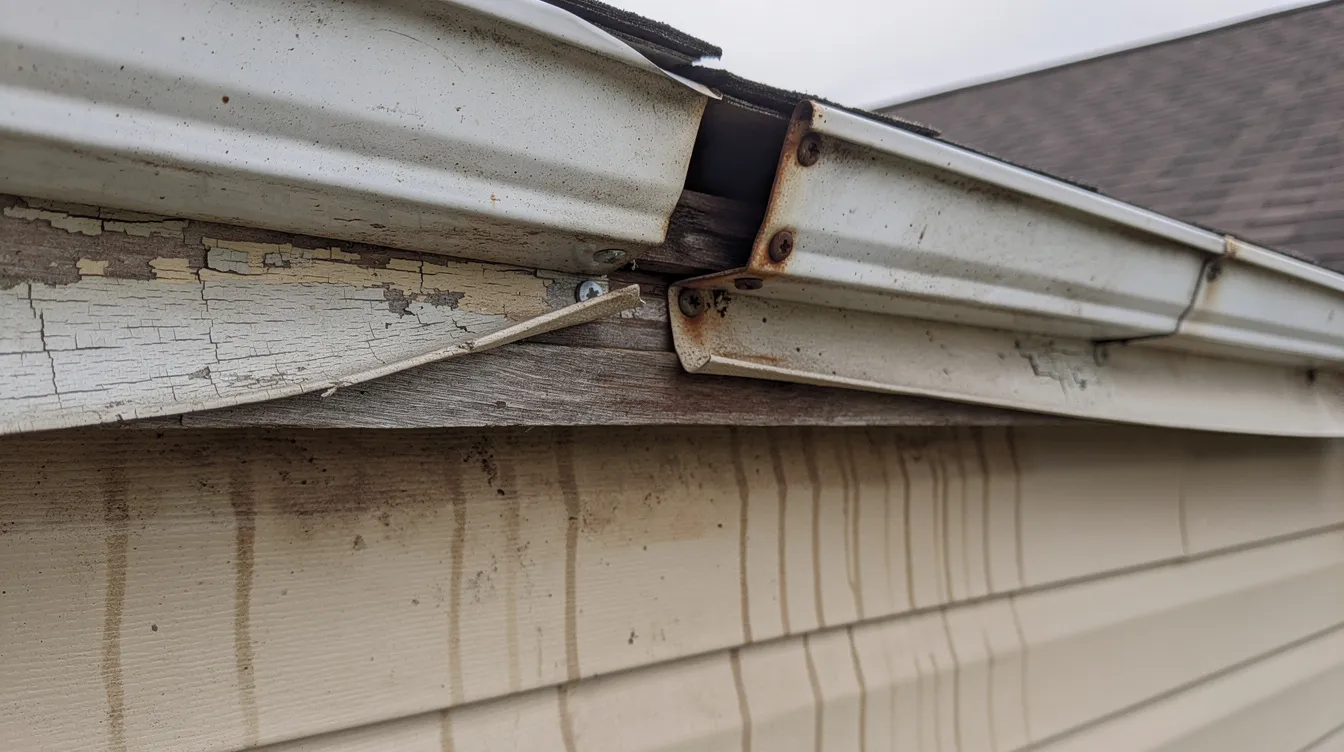
Inspect fascia and roof edge: Check fascia boards for rot by probing with a screwdriver. Replace any soft wood before mounting gutters—repairs now prevent callbacks later, and on open-eave garages you may need to fasten hangers into solid framing or rafter tails; if you discover broader issues, consider scheduling professional residential roofing service in New Jersey.
Snap a level reference line: Mark your high and low end based on planned pitch for the correct angle for drainage. Use a chalk line to guide bracket placement.
Install gutter hangers or brackets: Space hangers 18-24 inches apart, closer in areas with heavy snow loads. Fasten into solid framing with appropriate screws, not just into fascia facing.
Cut gutters to length on the ground: Use tin snips or a miter saw with a metal-cutting blade. Add extra length for corners and overlaps. Smooth sharp edges to prevent injury.
Attach end caps, outlets, and corners: Seal all joints with gutter sealant. Keep the back edge of the gutter properly under or behind the roof drip edge to prevent leaks. Use rivets or screws on gutter sides rather than through the bottom to avoid leaks, and face overlaps or joints with the direction of water flow to reduce seepage.
Hang the gutters: Lift sections into place along hangers. Check alignment with your chalk line. Maintain pitch for consistent flow and direct water flow toward outlets.
Install downspouts and elbows: Connect downspout outlets to elbows, run pipe down the wall, and use a drill to make pilot holes and secure brackets or outlet connections every 5-6 feet. Direct discharge away from the garage.
Test with water: Run a garden hose along the roof edge. Confirm water flows smoothly with no low spots, backflow, or pooling in the middle.
When to hire a pro: If your garage is tall, has metal building construction, or needs complex tie-ins to existing systems, consider professionals like Golden Home Improvements' roofing and home improvement team.
Connecting Detached Garage Gutters to Drains and Yard Grading
NJ's high water tables (2-5 feet in southern regions) make proper discharge critical. Gutters help, but poor grading will still cause water issues.
- Basic discharge: Use splash blocks or flexible extensions to move water at least 4-6 feet from the garage wall
- French drains: Downspouts can feed solid PVC pipe that empties into a French drain or dry well, sized at least 12 inches wide and 18 inches deep with crushed stone
- Solid vs. perforated pipe: Keep lines solid until well away from the garage to avoid saturating soil near the foundation
- Slope requirements: Plan for 1/8 inch per foot minimum slope for buried drain lines
- Clean-outs: Include access points at the high end of underground piping for maintenance
- Site grading: Confirm surrounding soil slopes away from the garage on all sides at roughly 2% grade, keeping in mind how Morris County's snow, ice, and storm patterns impact roofs and drainage design
Why Work with Golden Home Exteriors for Garage Gutters in NJ
New Jersey homeowners deserve a contractor who understands local conditions and delivers quality work. Golden Home Improvements' NJ roofing experts bring NJ-specific expertise to every project, offering reliable roof repair, replacement, and maintenance services across North and Central New Jersey.
- Local knowledge: The team understands NJ's climate, codes, and garage styles—from 1950s block construction to newer metal buildings, with a strong track record in roofing and home improvement in Chatham and Northern NJ and comprehensive roofing, siding, and gutter services for Summit-area homeowners
- Custom gutter design: They evaluate roof size, pitch, and site drainage to design a complete gutter system that helps protect the garage foundation, siding, and surrounding landscaping, while sizing gutters correctly and positioning downspouts where they'll perform best, coordinating with their roofing services across New Jersey
- Professional installation: Technicians use high-quality aluminum or steel gutters with stainless fasteners to make sure homeowners get gutters installed with precise measurement, correct pitch, and leak-free joints, backed by full-service roofing, siding, and window expertise and in-depth guidance on choosing the best siding materials and systems for your home
- Integration with existing systems: Golden Home Improvements can connect detached garage gutters to existing house gutters, yard drains, or French drains, and homeowners can start the process by using their contact page to request estimates, especially if they are also planning siding upgrades to boost curb appeal and efficiency in Morris County
- Maintenance and repairs: The company cleans, reseals, re-pitches, or upgrades older garage gutters and adds leaf protection where trees shed heavy debris, similar to the quality showcased in their home improvement project gallery
- Next steps: Contact Golden Home Improvements for an inspection and written estimate for installing gutters on a detached garage in NJ, especially if you're in areas like Morristown and surrounding Northern NJ communities
Frequently Asked Questions About Installing Gutters on Detached Garage
These questions address topics NJ homeowners commonly ask about detached garage gutters, and many are also covered more broadly in Golden Home Exteriors' home improvement tips and siding upgrade blog.
Do building codes in New Jersey require gutters on a detached garage?
While New Jersey state codes do not universally mandate gutters on detached garages, many local municipalities and HOAs have specific requirements for proper roof drainage to prevent water damage and erosion issues.
How much does it cost to add gutters to a detached garage in NJ?
The cost varies depending on materials and garage size, but aluminum gutters typically cost around $2.75 per linear foot. Additional costs include downspouts, installation labor, and any necessary repairs to fascia or roof edges.
How often should detached garage gutters be cleaned in NJ?
Gutters on detached garages should be cleaned at least twice a year, ideally in spring and fall, to remove leaves, debris, and prevent clogs that can lead to water damage.
Are leaf guards worth adding to garage gutters?
Leaf guards can reduce the frequency of gutter cleaning by preventing debris buildup, especially if your garage is near trees. However, they still require occasional maintenance to ensure proper water flow.
Can I install gutters myself, or should I always hire a professional?
DIY installation is possible for those with basic tools and skills, but professional installation is recommended for complex roofs, metal buildings, or to ensure proper pitch, secure downspout placement, and leak-free joints.